Node Life Cycle Controller
Node Lifecycle Controller根据 node的lease和node status更新时间,决定是否驱逐node上的pod或设置taint,设置node ready condition为unknown。
并且根据整个集群状态和zone里不同数量的unready node,设置不同的node速率-来添加taint或执行驱逐pod。
启动过程
controller manager创建一个goroutine启动Node Lifecycle controller,node lifecycle controller启动函数为 startNodeLifecycleController 在cmd\kube-controller-manager\app\core.go。
|
|
相关的命令行参数
Node Lifecycle controller相关的命令行参数有这些
|
|
数据结构
|
|
队列
这里使用的队列有:
workqueue
- nodeUpdateQueue
- podUpdateQueue
RateLimitedTimedQueue
- zonePodEvictor
- zoneNoExecuteTainter
队列后面再详细深入解析
controller初始化
初始化做这几个事情:
- 初始化数据结构和设置各个字段值
- 设置监听pod事件的handler,将pod item添加到podUpdateQueue里(如果启用taint manager,还会添加taint manager相关的handler,将pod添加到taint manager里的podUpdateQueue)
- pod sharedinformer中添加新的 indexers,用于查找node的上的所有pods。
- 初始化event recorder,用于发送event到apiserver
- 启用taint manager情况下,初始化taintManager,并添加node事件的handler–由taint manager处理
- 添加node事件handler–将node添加到nodeUpdateQueue
|
|
运行
首先会等待leaseInformer、nodeInformer、podInformerSynced、daemonSetInformerSynced同步完成。
如果启用taint manager,goroutine一直执行nc.taintManager.Run(stopCh)–运行taint manager,在下一篇介绍。
启动8个goroutine每秒执行nc.doNodeProcessingPassWorker–消费nodeUpdateQueue,更新node的NoSchedule taint和label。
启动4个goroutine每秒执行doPodProcessingWorker–消费podUpdateQueue,当pod所在的node为unready,将pod condition设为ready false。在不启用taint manager时候,且node为unready,则对该pod进行删除,如果该node unready持续时间超过pod-evicted-timeout,则node加入到zonePodEvictor。
启用taint manager启动goroutine每100ms执行doNoExecuteTaintingPass–消费zoneNoExecuteTainter队列,根据node的ready condition,来更新node的noexecute taints。
未启用taint manager启动goroutine每100ms执行doEvictionPass–消费zonePodEvictor队列,删除node上的所有pod,更新nodeEvictionMap标记node为evicted。
启动goroutine每 --node-monitor-period时间,执行monitorNodeHealth– 周期性的检查所有node状态,如果kubelet没有更新status.condition ready.lastHeartbeatTime或lease里的renew time 超过nodeMonitorGracePeriod,则更新node status为unknown,并根据zone里node unready的数量,设置每秒不同的数量node进行驱逐pod或添加taint。
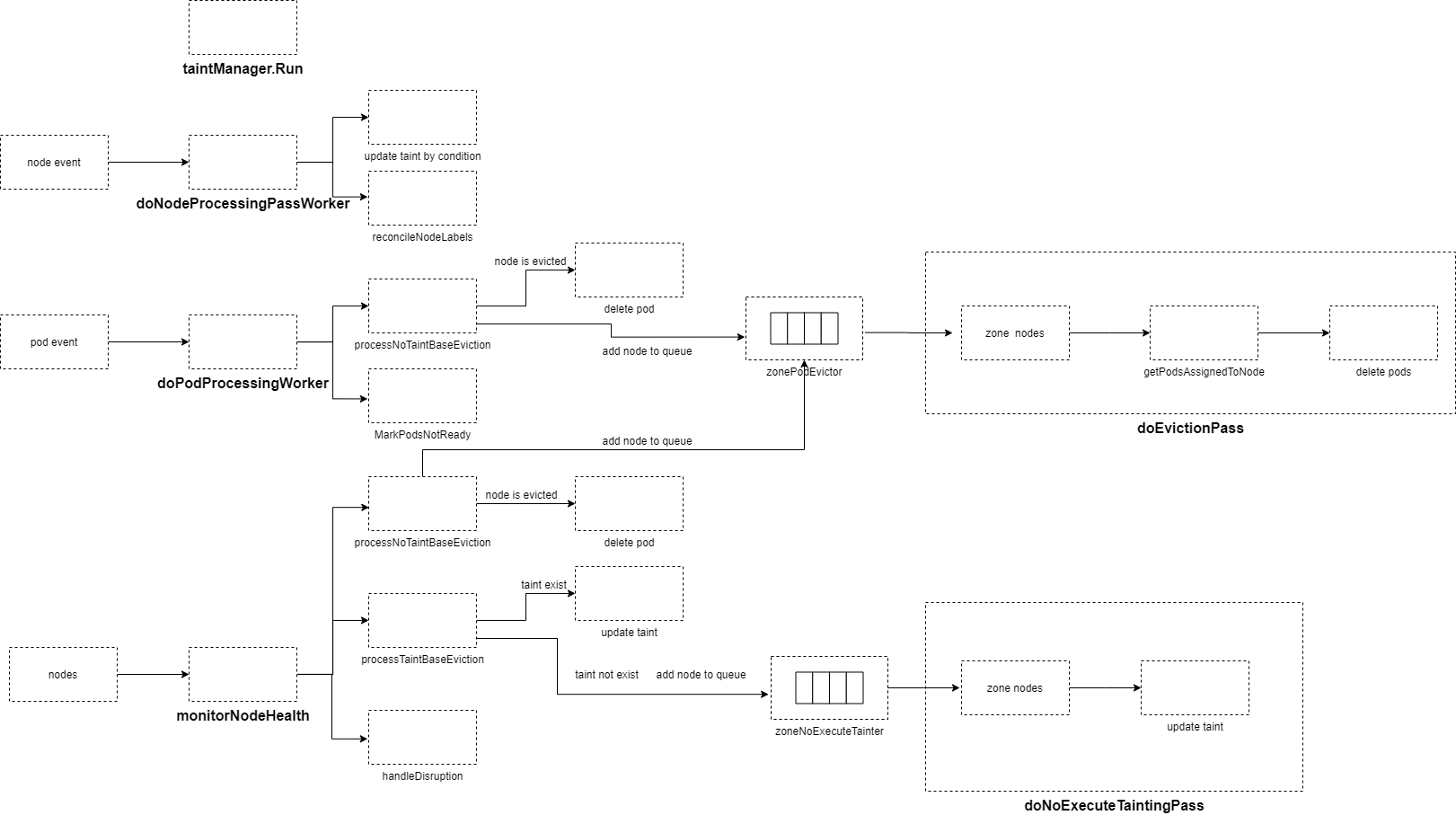
|
|
doNodeProcessingPassWorker
node更新、添加事件,都会添加到nodeUpdateQueue中。
doNodeProcessingPassWorker从nodeUpdateQueue获取一个node,根据node status里的condition,设置不同的noschedule taint和设置node label。
对该node执行doNoScheduleTaintingPass–根据node status里的condition设置taint
- node.status.Conditions 有type为ready的condition。如果这个condition.status为fasle,设置
key node.kubernetes.io/not-ready,Effect为noschedule的taint;这个condition.status为unknown,设置key node.kubernetes.io/unreachable,Effect为noschedule - node.status.Conditions 有type为MemoryPressure的condition。如果这个condition.status为true,设置
key node.kubernetes.io/memory-pressure,Effect为noschedule的taint - node.status.Conditions 有type为DiskPressure的condition。如果这个condition.status为true,设置
key node.kubernetes.io/disk-pressure,Effect为noschedule的taint - node.status.Conditions 有type为NetworkUnavailable的condition。如果这个condition.status为true,设置
key node.kubernetes.io/network-unavailable,Effect为noschedule的taint - node.status.Conditions 有type为PIDPressure的condition。如果这个condition.status为true,设置
key node.kubernetes.io/pid-pressure,Effect为noschedule的taint - node.Spec.Unschedulable有值,则设置
key node.kubernetes.io/unschedulable Effect为noschedule的taint
执行reconcileNodeLabels–当os和arch label存在,确保一致
- 缓存中获取node,确认node是否存在,node不存在,直接返回
- 检查node label是否为空,为空直接返回
- 如果存在label “beta.kubernetes.io/os”,则设置label “kubernetes.io/os"值是一样的,否则忽略
- 如果存在label “beta.kubernetes.io/arch”,则设置label “kubernetes.io/arch"值是一样,否则忽略
处理完执行Done,将node从workqueue中移除。
总结
当node ready condition.status为fasle,会设置 key node.kubernetes.io/not-ready,Effect为noschedule 的taint。如果启用了taint manager,还会设置 key node.kubernetes.io/not-ready,Effect为noExecute 的taint(在monitorNodeHealth里processTaintBaseEviction里执行的)
当node ready condition.status为unknown,会设置 key node.kubernetes.io/unreachable,Effect为noschedule 的taint。如果启用了taint manager,还会设置 key node.kubernetes.io/unreachable,Effect为noExecute 的taint(在monitorNodeHealth里processTaintBaseEviction里执行的)
label “beta.kubernetes.io/os”、“kubernetes.io/os"和beta.kubernetes.io/arch”、“kubernetes.io/arch"在kubelet node注册的时候就会有,这里只是确保 beta.kubernetes.io/*存在,kubernetes.io/*也要存在。
doPodProcessingWorker
当pod新生成且pod绑定了node(spec.NodeName存在)、pod更新且绑定的node发生变化都会添加到podUpdateQueue。
doPodProcessingWorker从podUpdateQueue读取一个pod,执行processPod–如果pod绑定node为unready,则将这个pod的ready condition设置为false,并更新transitionTimestamp。未启用taint manager,pod绑定node为unready,先驱逐这个pod,然后将node添加到zonePodEvictor
- 从缓存中获取pod,得到pod绑定的node名字。
- 判断node是否在nodeHealthMap里,如果不在,直接返回。
- 获取nodeHealthMap里最后发现node的ready condition,如果为空,直接返回。
- 如果未启用taint manager,执行processNoTaintBaseEviction
- node最后发现ReadyCondition为false,如果nodeHealthMap里的readyTransitionTimestamp加上podEvictionTimeout的时间是过去的时间–ReadyCondition为false状态已经持续了至少podEvictionTimeout,执行evictPods。
- node最后发现ReadyCondition为unknown,如果nodeHealthMap里的readyTransitionTimestamp加上podEvictionTimeout的时间是过去的时间–ReadyCondition为false状态已经持续了至少podEvictionTimeout,执行evictPods。
- node最后发现ReadyCondition为true,则执行cancelPodEviction–在nodeEvictionMap设置status为unmarked,然后node从zonePodEvictor队列中移除。
- evictPods–先从nodeEvictionMap获取node驱逐的状态,如果是evicted说明node已经发生驱逐,则把node上的这个pod删除。否则设置状态为toBeEvicted,然后node加入zonePodEvictor队列等待执行驱逐pod。
- node最后发现ReadyCondition不为true,执行MarkPodsNotReady–如果pod的ready condition不为false, 将pod的ready condition设置为false,并更新LastTransitionTimestamp;否则不更新pod
为什么node不在nodeHealthMap里或nodeHealthMap里最后发现node的ready condition为空,就直接返回?
node不在nodeHealthMap里,说明node被删除或者controller manager刚运行 node信息还未收集–monitorNodeHealth刚运行。nodeHealthMap里最后发现node的ready condition为空,说明node是刚添加。因为我们要获取最后保存的node状态来决定采取的动作,所以这里直接返回。
为什么只对未启用taint manager采取动作,启用的taint manager未采取动作?
在NewNodeLifecycleController里定义了, 在启用taint manager情况下,pod发生变化都会将pod添加进taintManager里的podUpdateQueue,由taint manager进行处理,所以不在这里处理。
执行驱逐pod
启用taint manager 执行doNoExecuteTaintingPass–添加NoExecute的taint。这里不执行驱逐,驱逐单独在taint manager里处理。
doNoExecuteTaintingPass是一个令牌桶限速队列
- 遍历zoneNoExecuteTainter,获得一个zone的node队列,从队列中获取一个node,执行下面步骤
- 从缓存中获取node
- 如果node ready condition为false,移除“node.kubernetes.io/unreachable”的taint,添加“node.kubernetes.io/not-ready” 的taint,Effect为NoExecute。
- 如果node ready condition为unknown,移除“node.kubernetes.io/not-ready” 的taint,添加“node.kubernetes.io/unreachable” 的taint,Effect为NoExecute。
未启用taint manager 执行doEvictionPass–对node上的所有pod进行驱逐。
doEvictionPass是一个令牌桶限速队列,+加入这个队列的node都是 unready状态持续时间大于podEvictionTimeout。
- 遍历zonePodEvictor,获取一个zone里的node队列,从队列中获取一个node,执行下面步骤
- 获取node的uid,从缓存中获取node上的所有pod
- 执行DeletePods–删除daemonset之外的所有pod,保留daemonset的pod
- 遍历所由的pod,检查pod绑定的node是否跟提供的一样,不一样则跳过这个pod
- 执行SetPodTerminationReason–设置pod Status.Reason为
NodeLost,Status.Message为"Node %v which was running pod %v is unresponsive",并更新pod。 - 如果pod 设置了DeletionGracePeriodSeconds,说明pod已经被删除,则跳过这个pod
- 判断pod是否为daemonset的pod,如果是则跳过这个pod
- 删除这个pod
- 在nodeEvictionMap设置node的状态为evicted
主动扫描node健康状态monitorNodeHealth
每隔nodeMonitorPeriod周期,执行一次monitorNodeHealth,维护node状态和zone的状态,更新未响应的node–设置node status为unknown和根据集群不同状态设置zone的速率。
node分类并初始化
从缓存中获取所有node列表,借助两个字段knownNodeSet(用来存放已经发现的node集合)和zoneStates(用来存储已经发现zone的状态–状态有Initial、Normal、FullDisruption、PartialDisruption)来进行对node进行分类,分为新加的–add、删除的deleted、新的zone node–newZoneRepresentatives。
对新发现的zone进行初始化–启用taint manager,设置执行node设置taint 队列zoneNoExecuteTainter(存放node为unready,需要添加taint)的速率为evictionLimiterQPS。未启用taint manager,设置安排node执行驱逐队列zonePodEvictor(存放zone里的需要执行pod evictor的node列表)的速率evictionLimiterQPS。同时在zoneStates里设置zone状态为stateInitial。
对新发现的node,添加到knownNodeSet,同时在zoneStates里设置zone状态为stateInitial,如果node的所属的zone未初始化,则进行初始化。启用taint manager,标记node为健康的–移除node上unreachable和notready taint(如果存在),从zoneNoExecuteTainter(存放node为unready,需要添加taint)队列中移除(如果存在)。未启用taint manager,初始化nodeEvictionMap(存放node驱逐执行pod的进度)–设置node的状态为unmarked,从zonePodEvictor(存放zone的需要pod evictor的node列表)队列中移除。
对删除的node,发送一个RemovingNode事件并从knownNodeSet里移除。
处理node status
超时时间
如果当前node的ready condition为空,说明node刚注册,所以它的超时时间为nodeStartupGracePeriod,否则它的超时时间为nodeMonitorGracePeriod。
心跳时间
最后的心跳时间(probeTimestamp和readyTransitionTimestamp),由下面规则从上往下执行。
如果node刚注册,则nodeHealthMap保存的probeTimestamp和readyTransitionTimestamp都为node的创建时间。
如果nodeHealthMap里没有该node数据,则probeTimestamp和readyTransitionTimestamp都为现在。
如果nodeHealthMap里的 ready condition没有,而现在有ready condition,则probeTimestamp和readyTransitionTimestamp都为现在,status为现在的status。
如果nodeHealthMap里的有ready condition,而现在的ready condition没有,说明发生了未知的异常情况(一般不会发生,只是预防性的代码),则probeTimestamp和readyTransitionTimestamp都为现在,status为现在的status。
如果nodeHealthMap里有ready condition,而现在的ready condition也有,且保存的LastHeartbeatTime与现在不一样。probeTimestamp为现在、status为现在的status。 如果保存的LastTransitionTime与现在的不一样,说明node状态发生了变化,则设置nodeHealthMap的readyTransitionTimestamp为现在。
如果现在的lease存在,且lease的RenewTime在nodeHealthMap保存的RenewTime之后,或者nodeHealthMap里不存在。则probeTimestamp为现在,保存现在lease到nodeHealthMap里。
尝试更新node状态
如果probeTimestamp加上超时时间,在现在之前–即status状态更新已经超时,则会更新update node。
更新ready、memorypressure、diskpressure、pidpressure的condition为:
相应condition不存在
|
|
相应的condition存在
|
|
如果现在node与之前的node不一样的–发生了更新,则对node执行update。
update成功,同时更新nodeHealthMap上的状态–readyTransitionTimestamp改为现在,status改为现在的node.status。
对unready node进行处理–驱逐pod
node当前的ReadyCondition–执行尝试更新node状态之后的node的ReadyCondition
node最后发现ReadyCondition–执行尝试更新node状态之前node的ReadyCondition
如果当前的ReadyCondition不为空,执行下面操作
- 从缓存中获取node上pod列表
- 如果启用taint manager,执行processTaintBaseEviction–根据node最后发现ReadyCondition 对node的taint进行操作
- node最后发现ReadyCondition为false,如果已经有“node.kubernetes.io/unreachable”的taint,将该taint删除,添加“node.kubernetes.io/not-ready” 的taint。否则将node添加到zoneNoExecuteTainter队列中,等待添加taint。
- node最后发现ReadyCondition为unknown,如果已经有“node.kubernetes.io/not-ready” 的taint,将该taint删除,添加“node.kubernetes.io/unreachable”的taint。否则将node添加到zoneNoExecuteTainter队列中,等待添加taint。
- node最后发现ReadyCondition为true,移除“node.kubernetes.io/not-ready” 和“node.kubernetes.io/unreachable”的taint,如果存在的话,同时从zoneNoExecuteTainter队列中移除。
- 未启用taint manager,则执行processNoTaintBaseEviction
- node最后发现ReadyCondition为false,nodeHealthMap里的readyTransitionTimestamp加上podEvictionTimeout的时间是过去的时间–ReadyCondition为false状态已经持续了至少podEvictionTimeout,执行evictPods。
- node最后发现ReadyCondition为unknown,nodeHealthMap里的readyTransitionTimestamp加上podEvictionTimeout的时间是过去的时间–ReadyCondition为false状态已经持续了至少podEvictionTimeout,执行evictPods。
- node最后发现ReadyCondition为true,则执行cancelPodEviction–在nodeEvictionMap设置status为unmarked,然后node从zonePodEvictor队列中移除。
- evictPods–先从nodeEvictionMap获取node驱逐的状态,如果是evicted说明node已经发生驱逐,则把node上所有的pod删除。否则设置状态为toBeEvicted,然后node加入zonePodEvictor队列等待执行驱逐pod。
这里有个疑问:
为什么要用observedReadyCondition 而不用currentReadyCondition,observedReadyCondition和currentReadyCondition不一定一样?
比如node挂了currentReadyCondition变为unknown,而observedReadyCondition为ready
这样明显有问题,这一周期不会做驱逐或taint,下一周期observedReadyCondition和currentReadyCondition都为unknown 一定会驱逐pod或添加taint。
可能考虑nodeMonitorPeriod都很短,不立马执行驱逐或taint没有什么大问题。
集群健康状态处理
每个zone有四种状态,stateInitial(刚加入的zone)、stateFullDisruption(全挂)、statePartialDisruption(挂的node比例超出了unhealthyZoneThreshold)、stateNormal(剩下的所有情况)
allAreFullyDisrupted代表现在所有zone状态stateFullDisruption全挂
allWasFullyDisrupted为true代表过去所有zone状态stateFullDisruption全挂
集群状态有四种:
- allAreFullyDisrupted为true allWasFullyDisrupted为true
- allAreFullyDisrupted为true allWasFullyDisrupted为false
- allAreFullyDisrupted为false allWasFullyDisrupted为true
- allAreFullyDisrupted为false allWasFullyDisrupted为false
计算现在集群的状态
遍历现在所有的zone,每个zone遍历所有node的ready condition,计算出zone的状态。
根据zone的状态设置allAreFullyDisrupted的值
如果zone不在zoneStates,添加进zoneStates并设置状态为stateInitial
计算过去集群的状态
从zoneStates读取保存的zone列表,如果不在现在的zone列表里,则从zoneStates移除
根据zoneStates里保存的zone状态设置allWasFullyDisrupted值
设置zone 每秒安排多少个node来执行taint或驱逐
当allAreFullyDisrupted为false allWasFullyDisrupted为true–之前zone未全挂,现在所有zone全挂。
- 遍历所有node,设置node为正常状态。
- 启用taint manager,执行markNodeAsReachable–移除“node.kubernetes.io/not-ready”和“node.kubernetes.io/unreachable”的taint,如果存的话,同时从zoneNoExecuteTainter队列中移除
- 未启用taint manager,执行cancelPodEviction–在nodeEvictionMap设置status为unmarked,然后node从zonePodEvictor队列中移除
- 从zoneStates读取保存的zone列表,设置zone 每秒安排多少个node来执行taint或驱逐
- 启用taint manager,设置zoneNoExecuteTainter的速率为0
- 未启用taint manager, 设置zonePodEvictor的速率为0
- 设置所有zoneStates里的zone为stateFullDisruption
当 allAreFullyDisrupted为true allWasFullyDisrupted为false–过去所有zone全挂,现在所有zone未全挂
- 遍历所有node更新nodeHealthMap里的probeTImestamp、readyTransitiontimestamp为现在的时间戳
- 遍历zoneStates,重新评估zone的每秒安排多少个node来执行taint或驱逐
- 当zone的状态为stateNormal,如果启用taint manager,则zoneNoExecuteTainter速率设置为evictionLimiterQPS,否则,设置zonePodEvictor的速率为evictionLimiterQPS的速率
- 当zone状态为statePartialDisruption,如果启用taint manager,根据zone里的node数量,当node数量大于largeClusterThreshold,设置zoneNoExecuteTainter速率为SecondEvictionLimiterQPS;小于等于largeClusterThreshold,设置zoneNoExecuteTainter速率为0。未启用taint manager,根据zone里的node数量,当node数量大于largeClusterThreshold,设置zonePodEvictor速率为SecondEvictionLimiterQPS;小于等于largeClusterThreshold,设置zonePodEvictorTainter速率为0。
- 当zone状态为stateFullDisruption,如果启用taint manager,则zoneNoExecuteTainter速率设置为evictionLimiterQPS,否则,设置zonePodEvictor的速率为evictionLimiterQPS的速率
- 这里不处理stateInitial状态的zone,因为下一周期,zone会变成非stateInitial,下面就是处理这个情况的
除了上面两种情况,还有一个情况要进行处理,allAreFullyDisrupted为false allWasFullyDisrupted为false,就是没有发生集群所有zone全挂。这个时候zone有可能发生状态转换,所以需要重新评估zone的速率
- 遍历zoneStates,当保存的状态和新的状态不一致的时候–zone状态发生了变化,重新评估zone的速率
- 当zone的状态为stateNormal,如果启用taint manager,则zoneNoExecuteTainter速率设置为evictionLimiterQPS,否则,设置zonePodEvictor的速率为evictionLimiterQPS的速率
- 当zone状态为statePartialDisruption,如果启用taint manager,根据zone里的node数量,当node数量大于largeClusterThreshold,设置zoneNoExecuteTainter速率为SecondEvictionLimiterQPS;小于等于largeClusterThreshold,设置zoneNoExecuteTainter速率为0。未启用taint manager,根据zone里的node数量,当node数量大于largeClusterThreshold,设置zonePodEvictor速率为SecondEvictionLimiterQPS;小于等于largeClusterThreshold,设置zonePodEvictorTainter速率为0。
- 当zone状态为stateFullDisruption,如果启用taint manager,则zoneNoExecuteTainter速率设置为evictionLimiterQPS,否则,设置zonePodEvictor的速率为evictionLimiterQPS的速率
- zoneStates里的状态更新为新的状态
而allAreFullyDisrupted为true allWasFullyDisrupted为true,集群一直都是挂着,不需要处理,zone状态没有发生改变。
总结
只有在这几种情况下,会调整队列速率:
- 集群里所有zone全挂,zone的速率设置为0
- 集群未全挂,zone的unready node比例超过了unhealthyZoneThreshold,且node数量大于largeClusterThreshold,zone的速率设置为SecondEvictionLimiterQPS
其中集群里没有发生的所有zone全挂,某个zone发生全挂,zone的速率还是evictionLimiterQPS
-
No backlinks found.